
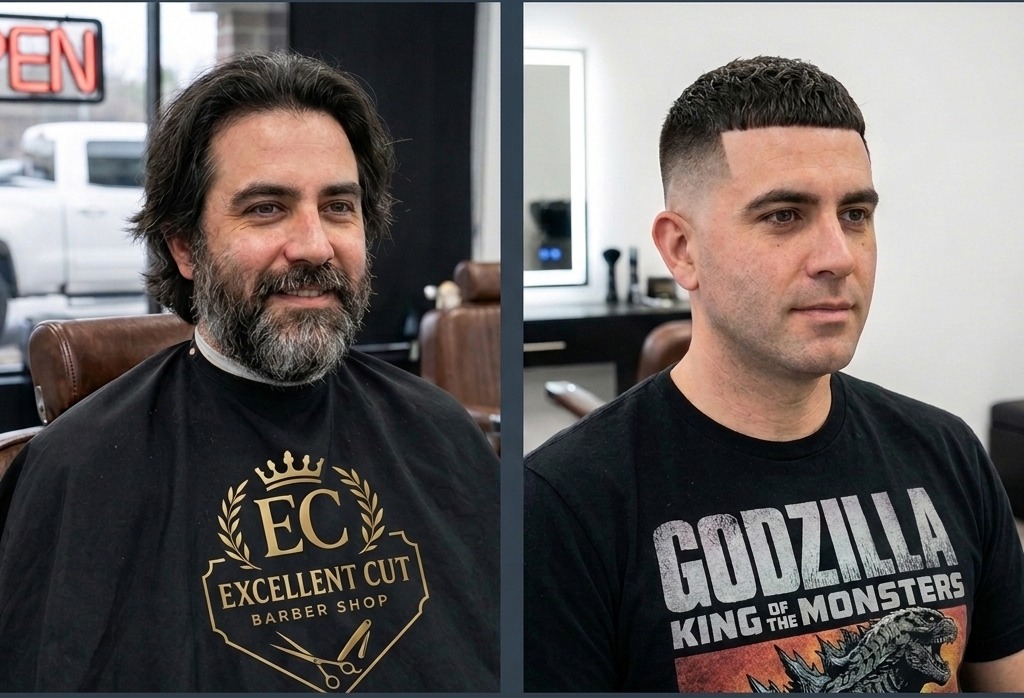
There is a distinct confidence boost that happens the moment you step out of a barbershop. Your edges are perfectly clean, your hair has the ideal amount of volume, and everything looks meticulously structured. But as the days roll by, that ultra-crisp look inevitably begins to soften.
Human hair grows at an average rate of about half an inch per month. While that might not sound like much, a mere quarter-inch of new growth can completely change how a tight fade or a structured trim sits on your head.
If your goal is to maintain a consistently sharp appearance, booking your appointments based on your specific hairstyle is the secret. Let’s break down the ideal haircut schedules for every style, hair type, and maintenance preference.
The Ultimate Haircut Frequency Guide by Hairstyle
The shorter your hair is, the faster it will look out of shape. A millimeter of growth on a completely buzzed head is incredibly noticeable, whereas that same millimeter on a shoulder-length cut won’t change a thing.
To keep a truly sharp aesthetic, use this breakdown to match your current style to its optimal maintenance schedule:
Short and Ultra-Short Styles (Every 1 to 2 Weeks)
If you rock a high skin fade, buzz cut, or a precision line-up, you fall into the highest maintenance category.
- Skin Fades & Buzz Cuts: Because a skin fade relies on high contrast between bare scalp and hair, stubble will begin to break the clean illusion within less than a week. To keep it looking razor-sharp, you need a touch-up every 1 to 2 weeks.
- The “Line-Up Only” Option: If you want to stretch your actual haircut appointments out, many barbers offer a quick, lower-cost “line-up” service. This cleans up just the sideburns, neck line, and forehead edges to buy you another week of looking sharp.
Medium-Short and Classic Cuts (Every 3 to 4 Weeks)
This category includes timeless styles like the classic taper fade, pompadours, crew cuts, and texturized crops.
- Classic Tapers & Crop Cuts: These styles leave slightly more hair on the sides and back, meaning they are much more forgiving as they grow out.
- The 4-Week Threshold: Around week three, your hair will start losing its intentional shape, and styling it will require more product than usual. A 3 to 4 week cadence ensures you never hit that awkward, overgrown phase where your hair looks heavy around the ears.
Medium-Length and Modern Flow Styles (Every 4 to 6 Weeks)
For those sporting slick-backs, classic side-parts, or messy french crops, you have a bit more breathing room.
- Maintaining Volume and Shape: The goal here isn’t necessarily keeping a clean skin blend, but rather managing bulk and split ends. As medium hair grows, it can become weighed down and lose its natural lift. Visiting your stylist every 4 to 6 weeks keeps the texturizing fresh and ensures the weight distribution stays balanced.
Long Hair (Every 8 to 12 Weeks)
Even if you are actively growing your hair out, avoiding the barber entirely is a mistake.
- Healthy Growth: Long hair needs routine dusting—trimming away just the very tips to remove split ends. If left unchecked, split ends will travel up the hair shaft, causing breakage and frizz that ruins a sleek look. Plan a light trim every 2 to 3 months to keep long hair looking healthy and intentional rather than neglected.
Three Signs It’s Time to Book Your Next Appointment
Sometimes calendars lie, but your hair doesn’t. If you aren’t sure whether you need a trim yet, look for these three telltale signs that your current look is losing its edge:
1. The Sideburns and Neckline Look Fuzzy
The first area to give away an aging haircut is the lower perimeter. If your clean neckline has dissolved into rogue neck hairs, or your sideburns are starting to creep down toward your beard line, your sharp look is officially gone.
2. Your Hair Resists Styling
If you suddenly find yourself fighting your hair every morning, using double the amount of clay or pomade, or noticing that your volume deflates by lunchtime, it means the structure of the cut has grown out. Your barber needs to re-establish the layers to remove the excess weight.
3. The “Over-the-Ear” Overgrowth
Take a look in the mirror from the side. If the hair around the top of your ears is starting to curl outward or rest directly on your ears, it creates a messy frame for your face. Keep that area clear to instantly look cleaner and more put-together.
Summary: Finding Your Personal Rhythm
| Hairstyle Type | Example Cuts | Ideal Frequency | Maintenance Level |
| Ultra-Short | Skin Fades, Buzz Cuts, High Fades | 1–2 Weeks | High |
| Short / Classic | Taper Fades, Crew Cuts, Comb-Overs | 3–4 Weeks | Moderate |
| Medium Length | Pompadours, Slick-Backs, Quiffs | 4–6 Weeks | Low-Moderate |
| Long Hair | Bro Flows, Shoulder-Length, Man Buns | 8–12 Weeks | Low |
Pro Tip: Don’t wait until your hair looks messy to call your barbershop. The best way to ensure you always look sharp is to pre-book your next appointment right from the barber’s chair before you leave. This locks in your schedule and prevents you from spending an unexpected week looking unkempt while waiting for an open slot.