
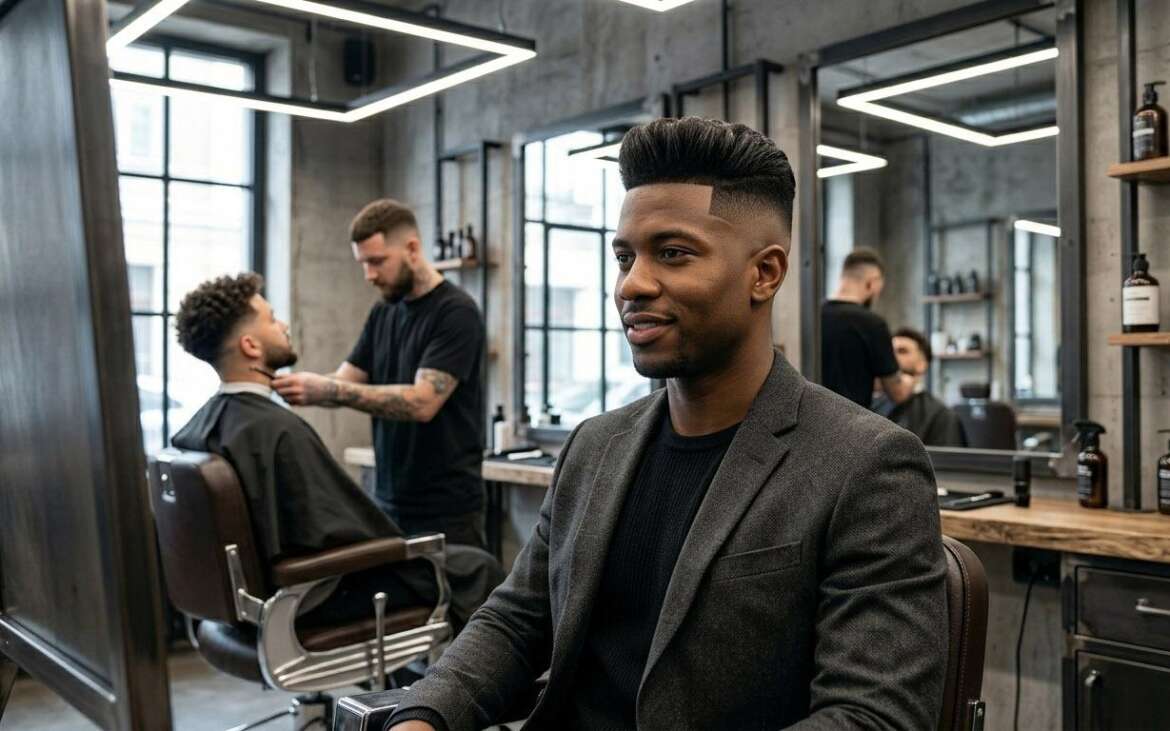
The fade haircut is far more than a passing grooming trend; it is a foundational element of modern men’s style. Originating deep within military tradition for its clean efficiency, the fade has evolved over decades into a highly versatile art form. Today, a pristine fade is a powerful way to elevate your presentation, boosting your self-pride, mental confidence, and overall well-being.
The brilliance of a fade lies in its seamless gradient—the way a skilled barber blends hair from a specific length down into the skin or a shorter layer. Whether you work in a conservative corporate boardroom or thrive in a creative, fast-paced urban environment, there is a fade style tailored perfectly to your lifestyle and head shape.
If you are looking to refresh your aesthetic this season, here are the top 5 fade haircut styles every man should try at least once, along with the details you need to choose the right one.
1. The Classic Mid Fade
If you are entirely new to fades and want a balanced, foolproof style, the Mid Fade is your ideal starting point. As the name suggests, the transition gradient begins exactly halfway up your head—typically in the space right above your temples and just over the ears.
- Why It Works: It provides the perfect middle ground between bold and conservative. It removes enough weight from the sides to lean out your face while leaving plenty of room for a seamless blend into the top.
- Best Paired With: A classic crew cut, a textured pompadour, or a neat side part. It is incredibly versatile and adapts beautifully to straight, wavy, or tightly coiled hair textures.
2. The Low-Drop Fade
Instead of a straight, linear transition across the sides of the head, the Drop Fade introduces a sophisticated, curved architectural line. The blend starts low near the front hairline and purposefully “drops” down significantly behind the ears, following the natural, lower curvature of the skull.
- Why It Works: Leaving more hair weight around the upper sides and the crown of the head creates a smoother, more organic transition. It gives you a clean, crisp perimeter around the neck and ears while maintaining a relaxed, classic silhouette from the front.
- Best Paired With: Textured crops, natural curls, or a messy “modern shag.” It is an exceptional look for men who want a sharp style that still honors their hair’s natural flow and movement.
3. The Skin Fade (Bald Fade)
For the man who wants maximum contrast and a striking, high-impact look, the Skin Fade (also frequently called a Bald Fade) is the ultimate choice. This style requires the barber to take the lowest section of the blend completely down to the bare skin using a foil shaver or straight razor, creating an ultra-clean gradient that gradually thickens as it moves upward.
- Why It Works: The stark contrast between bare skin and a dense top makes your features pop and instantly lends an intentional, high-fashion edge to your look. It also makes thin hair on top appear denser by comparison.
- Best Paired With: High-top fades, sharp buzz cuts, modern pompadours, or disconnected undercuts. Keep in mind that maintaining the “skin-smooth” look requires a trip to the barber every 2 to 3 weeks.
+---------------------------------------------------------------+
|                    FADE CONTRAST & MAINTENANCE                |
|                                                               |
|  [ Fade Type ]     --->  [ Contrast Level ]  ---> [ Maintenance ]|
|  Classic Taper     --->  Low / Subtle        ---> 4-5 Weeks       |
|  Low-Drop Fade     --->  Medium              ---> 3-4 Weeks       |
|  Skin / Bald Fade  --->  High / Intense      ---> 2 Weeks         |
+---------------------------------------------------------------+
4. The High Fade
The High Fade sits at the opposite end of the spectrum from the low fade. The blending process begins high up on the head, usually within the upper inch or two near the crown and temples. This means the sides of your head are kept exceptionally short for the majority of the profile.
- Why It Works: The high fade acts as an instant visual lifter. By stripping away all bulk from the sides of the forehead and temples, it elongates the face and emphasizes your jawline. It is an incredibly athletic, commanding style.
- Best Paired With: A short French crop, a slicked-back undercut, or a hard-part comb-over. It is particularly striking on round or square face shapes.
5. The Tailored Classic Taper Fade
If your workplace enforces a strict professional dress code, or if you prefer a look that projects an air of timeless, “quiet luxury,” the Classic Taper Fade is your best bet. Unlike a traditional fade that clears out a large surface area on the sides, a taper fade isolates the gradient strictly to two specific points: the sideburns and the lowest edge of the neckline.
- Why It Works: The rest of the hair on the sides retains a clean, scissor-cut length that hugs the ears neatly. It provides the clean lines of a fresh haircut where it matters most, without the dramatic look of exposed scalp.
- Best Paired With: Traditional side parts, Ivy League cuts, and longer executive flows. It grows out incredibly gracefully, making it low-maintenance.
How to Choose the Right Fade for Your Face Shape
A successful fade depends heavily on choosing a style that balances your natural facial structure. Use these quick guidelines before your next appointment:
- Round Face: Opt for a High Fade or a high Skin Fade. Removing bulk from the sides adds perceived height to the top of your head, lengthening your silhouette.
- Long / Oval Face: Choose a Low-Drop Fade or a Classic Taper. Keeping slightly more weight on the sides prevents your face from looking overly elongated.
- Square Face: A Mid Fade complements a strong jawline beautifully, softening the corners of the head while maintaining an athletic, balanced frame.
Pro Barbering Advice for Your Next Visit
When you sit down in the chair, communication is key. Rather than just asking for a “fade,” tell your barber exactly where you want the transition to start (low, mid, or high) and what length you want at the absolute bottom (e.g., a “#1 guard” or “down to the skin”). Bringing a reference photo is always the most effective way to ensure you and your stylist are perfectly aligned.
Styling Tip: To maintain the distinct dimension of a fresh fade, style the hair on top using a high-quality matte clay or texturizing styling powder. Avoiding overly greasy gels keeps the focus on the clean, gradient work along the sides of your head.